
From Philly and the Pa. suburbs to South Jersey and Delaware, what would you like WHYY News to cover? Let us know!
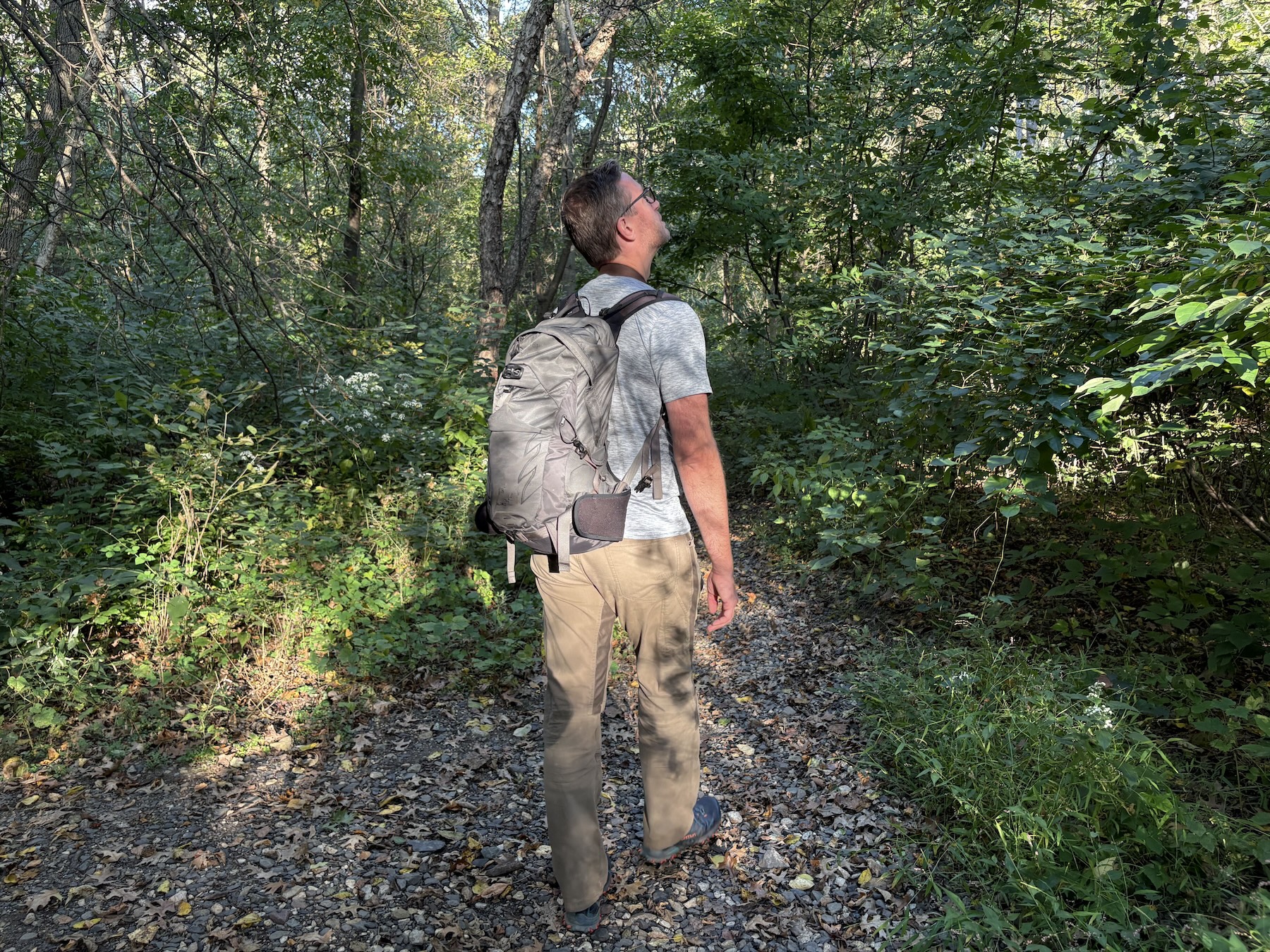
Even among lively chatter in Philadelphia’s Pennypack Park, Holger Pflicke easily identifies unique bird calls, pointing out the faint chirps to the small crowd following him.
Philadelphia is on the Atlantic Flyway, a migration route birds travel as they move from north to south. This makes Philly and the surrounding areas a hotspot for bird watching during migration season. In recent years, Pflicke said more and more people have taken an interest.
“I’m really amazed how many people have taken up this hobby,” said Pflicke, who has been leading birding walks with Bird Philly since 2019. “I started in my teens. At that point, it was something old white dudes were into. Now we have a plethora of people of all ages and backgrounds.”
Pflicke hopes people’s heightened interest in birding will prompt greater protections and awareness for nature. While Greater Philadelphia can be a great place for birds to stop on their migratory journeys, development, urbanization and climate change may impact bird migration and threaten habitat.
As the planet warms and the length of seasons change, bird migration patterns are shifting across the Northern Hemisphere. Their ranges are shifting, too; species that prefer cooler temperatures move further north. A study by the nonprofit National Audubon Society estimates that 40% of Pennsylvania’s 227 bird species are vulnerable to climate change.
Pflicke said that while a changing climate might impact bird behavior, the biggest threat to their overall well-being is the loss of greenspaces.
“While climate change has some effect on birds, most of them are probably okay adapting,” Pflicke said. “They might change their range and migration patterns, but if they don’t have a forest to come back to, it doesn’t matter. It’s really critical that we protect their habitat.”


